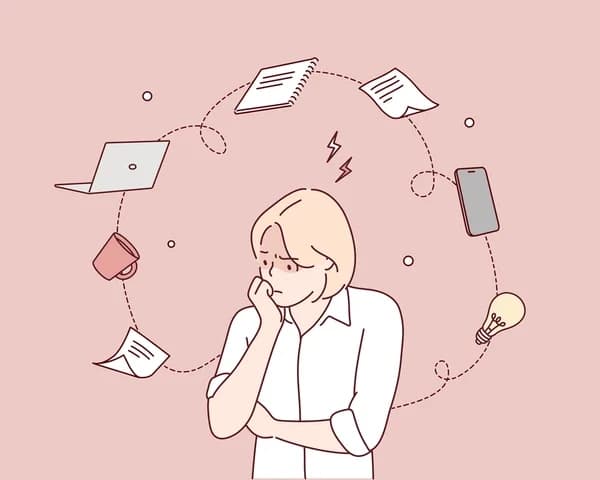
Anxiety: what it is, its symptoms and how to treat it with professional help
Written by our practice team · Spanish original clinically reviewed by Junisse Montaño, MSc, Clinical Psychologist · College of Psychologists No. JMP-1004-25 · Last reviewed:
Anxiety is one of the most common reasons people seek psychological help. If lately you've felt that your mind won't stop, your heart beats faster for no reason or it's hard for you to relax, this article is for you.
To go deeper into the clinical approach to anxiety (CBT, treatment plan, expected time frames), visit our hub: Anxiety Treatment in Santa Cruz, Bolivia. If you're ready to start therapy, you can also learn about the formats in Individual Therapy in Santa Cruz.
What is anxiety?
Anxiety is the body's natural response to situations we perceive as threatening or stressful. However, when it becomes constant, intense or has no apparent cause, it can turn into an anxiety disorder that interferes with everyday life.
Common symptoms of anxiety
Although everyone experiences it differently, these are some of the most frequent symptoms:
- Racing or constant thoughts
- Palpitations or a feeling of pressure in the chest
- Sweating or trembling for no apparent reason
- Difficulty sleeping or resting
- Trouble concentrating
- Avoiding places or social situations
- A feeling that “something bad is going to happen”
Sound familiar? If you identify with several of these symptoms, it's important for you to know that you're not alone, and that there is treatment.
What causes anxiety?
The causes can be many: prolonged stress, traumatic experiences, family or work problems, or even neurochemical imbalances. In most cases, anxiety doesn't go away on its own and needs professional attention.
How is anxiety treated in psychotherapy?
Psychological therapy lets you understand where your anxiety comes from and gain tools to manage it. Some effective approaches include:
- Cognitive behavioral therapy (CBT): helps you identify and change distorted thoughts.
- Breathing and relaxation techniques: to regain physical and mental control.
- Emotional psychoeducation: so you can better understand your emotions and how to manage them.
Strategies for navigating anxiety, with science and with compassion
While you take the step of seeking support, there are self-management tools you can practice day to day to lower the intensity of your anxiety. They don't replace therapy, but they help:
- Diaphragmatic breathing. When you feel your anxiety rising, breathe in slowly through your nose, feeling your belly expand, and breathe out gently through your mouth. Repeat it several times: it calms the nervous system in the moment.
- Mindfulness. Bring your attention to the present without judging (the sensations in your body, the sounds, what you're doing). It helps you unhook from anxious thoughts instead of fighting them.
- Question the anxious thought. Identify the idea that triggers the anxiety and ask yourself: what evidence do I have that it's true? Instead of “I'm going to fail,” try “I'm going to do my best, and if something doesn't work out, I'll learn from it.”
- Take care of your body. Regular exercise, good-quality sleep and limiting caffeine and alcohol reduce your baseline anxiety more than you might think.
And something that matters as much as the techniques: treat yourself with compassion. Anxiety doesn't define who you are, and the goal isn't always to eliminate it, but to learn to live a full life in spite of it. That's the foundation of approaches like Acceptance and Commitment Therapy (ACT), which works on accepting what's difficult together with commitment to what matters to you. Seeking support isn't weakness: it's an act of care toward yourself.
When is it time to seek help?
If anxiety affects your quality of life, your relationships or your daily performance, it's time to ask for professional support. You don't have to wait until you “get worse” to take action.
Would you like to begin your healing process?
At the practice of Junisse Montaño, a clinical and health psychologist, we offer you a safe space to talk and understand what's happening to you, and we'll walk alongside you as you find your balance.
📍 In-person sessions in Santa Cruz, Bolivia, and online therapy as well.
Sessions are held in Spanish. Therapy in English is available with psychologist Jazmín Villazón.
About this article
The Spanish original was written by the practice's team and clinically reviewed by Junisse Montaño, MSc in Clinical and Health Psychology (ISEP Barcelona), lead psychologist of the practice in Santa Cruz de la Sierra and a member of the Colegio de Psicólogos de Santa Cruz (Santa Cruz College of Psychologists), membership No. JMP-1004-25. In-person sessions in downtown Santa Cruz and online throughout Bolivia. Book a consultation.
Related topics
Recommended local resources
If you'd like to work on this with professional support, you can move forward with local or online care.
Does this sound familiar?
If this article resonated with you, remember that you don't have to navigate your emotions alone. I'm here to support you through the process.
Book an Appointment on WhatsAppYou might also like

How to manage anxiety and stress in uncertain times
In uncertain times, it's normal to feel anxiety and stress. In this guide you'll find practical, psychology-based strategies to regain your balance: acknowledging your emotions, building healthy routines, relaxation techniques, setting limits on news and social media, focusing on what you can control, and knowing when to seek professional help. If you feel it's too much for you, therapy can help you feel calm and well again.

How do I know if I need to see a psychologist? 10 clear signs
Not sure whether you should see a psychologist? 10 clear signs that it's time to seek professional help, how to tell everyday distress from distress that needs treatment, and what to do about it in Santa Cruz de la Sierra.

How to overcome depression: types, symptoms and treatment guide
Learn about the types of depression, their biological causes and how to overcome it. An up-to-date clinical guide to MDD, dysthymia and anxiety to help you seek professional support.