
Psychologist for Teenagers in Santa Cruz, Bolivia: When to Seek Help and How to Start
Written by our practice team · Spanish original clinically reviewed by Junisse Montaño, MSc, Clinical Psychologist · College of Psychologists No. JMP-1004-25 · Last reviewed:
Adolescence packs physical, emotional and social changes into just a few years. Most of them are navigated without professional help, but when the distress persists and interferes with school, sleep or family life, a psychologist for teenagers offers a space of their own, confidential and with concrete tools.
At the practice in Santa Cruz we see adolescents aged 13 to 17 with two psychologists who work with children and adolescents, in person in downtown Santa Cruz or online by video call. In this guide you'll find when to seek help, what therapy looks like at this stage, who provides it, what it costs and how to get started.
When does a teenager need a psychologist?
There's no need to wait for a crisis. These signs, especially if they last more than two weeks or are getting worse, are reason enough for a first consultation:
- Sadness, irritability or apathy that can't be explained by a specific situation.
- Isolation: they stop seeing their friends, shut themselves away or drop activities they used to enjoy.
- Falling grades, missed school or refusing to go to school.
- Anxiety about exams, presentations or social situations, sometimes with stomachaches, headaches or insomnia.
- Marked changes in sleep or eating.
- Constant family conflicts that talking doesn't resolve.
- Risky behavior or use of alcohol or other substances.
- Self-harm, comments about not wanting to live, or hopelessness. Here it's best not to wait: seek immediate care and ask for an urgent appointment.
Anxiety, depression and stress are common at this stage, according to the World Health Organization, and they respond better the earlier they're addressed.
What changes in therapy between ages 13 and 17
With adolescents the work is mostly talk-based, using cognitive behavioral therapy techniques adapted to their age. The most common topics are self-esteem, emotional regulation, handling social media, and academic and social pressure.
A key point is confidentiality. At the start of the process, the adolescent and their parents explicitly agree on what gets shared with the family and what stays within the session. Without that agreement it's hard for a young person to open up; with it, therapy moves forward.
Sessions last 60 minutes and take place at the office in downtown Santa Cruz or by video call, depending on what the family needs.

The practice's main room, in Oficina 211 of the Edificio Don Alcides (Piso 1), in downtown Santa Cruz.
Who sees teenagers at the practice
- Kenia Chávez works with children, adolescents and adults, combining cognitive behavioral therapy with solution-focused brief therapy.
- Jazmín Villazón works mainly with children and adolescents, using play therapy and behavioral techniques adapted to each age.
Both are part of the team at the practice of Junisse Montaño, the lead clinical psychologist.
What the first appointment is like
The first session is with the parents or caregivers only, without the teenager. That hour is used to lay out the reason for seeking help, the family and school history, and any previous assessments. Parents leave with a first clinical impression and with guidance on how to present the process to their son or daughter.
From the second session on, the teenager attends. Every 4 to 6 sessions a parent guidance session is scheduled to review how things are going at home and which tools to apply, and the practice coordinates with the school when appropriate and with written authorization.
What therapy for teenagers costs in Santa Cruz
A 60-minute session costs 190 Bs, in person or online. The 4-session package costs 650 Bs and the 10-session package, 1,500 Bs. You can review all of the practice's prices before deciding.
How to choose the right psychologist for your child
Look for someone with specific training and experience with adolescents, not just adults: this stage calls for a different language and a different framework. Ask how they handle confidentiality, whether they work with parents and what approach they use. And watch your son or daughter's first reaction: feeling heard and not judged from the start matters more than any credential.
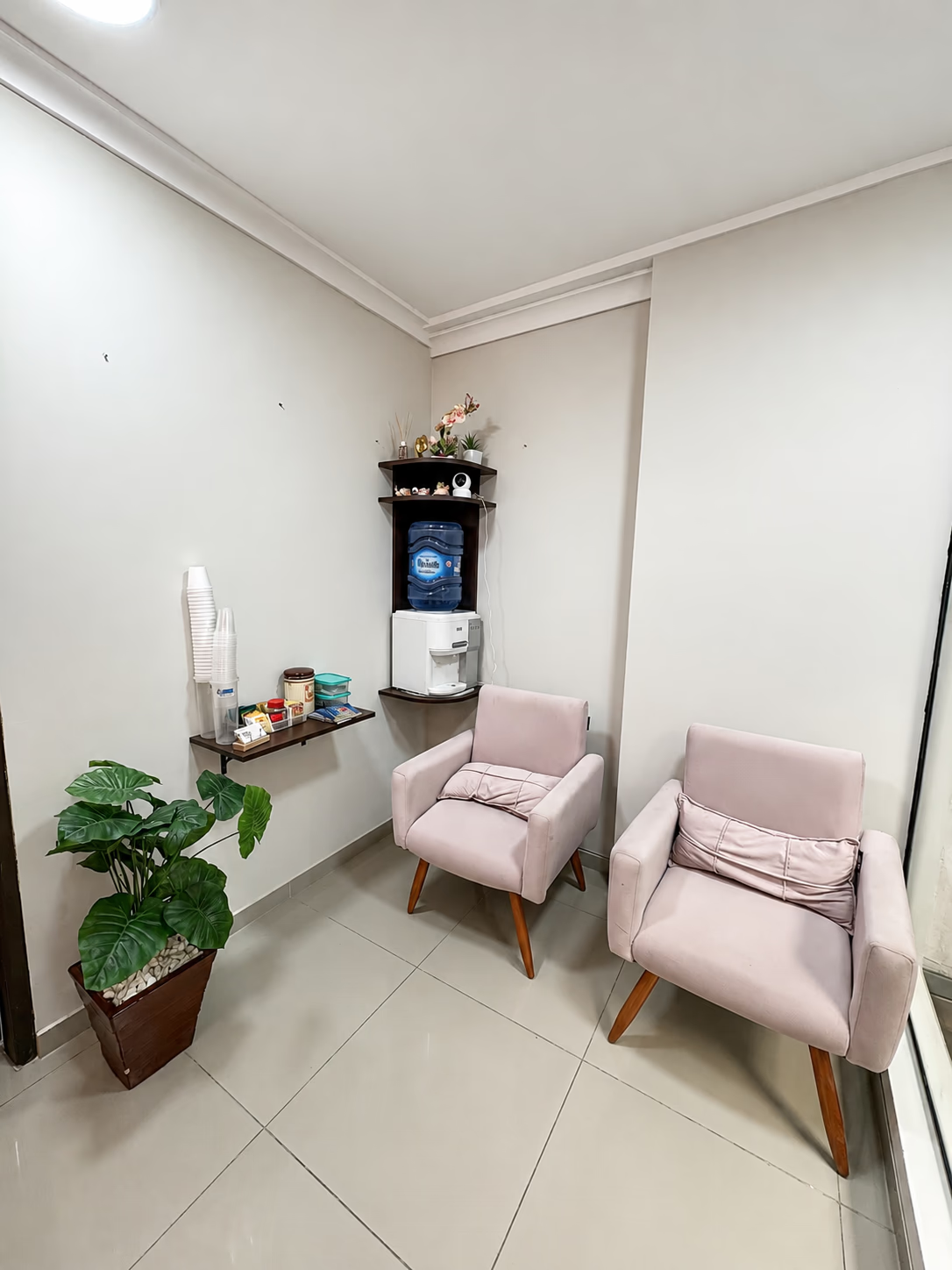
The waiting room. Many teenagers come with a family member who waits here during the session.
How to support a teenager with anxiety or depression
While you wait for the appointment, and also during therapy, these things help at home:
- Listen without judging and validate what they feel, even if it seems out of proportion to you.
- Avoid minimizing ("it's not a big deal," "when I was your age...") or pressuring them with lectures.
- Keep up basic routines: sleep schedules, meals and some physical activity.
- Present professional help as a normal resource, not as a punishment or as a sign that "something is wrong" with them.
Frequently asked questions
From what age is it considered therapy for adolescents?
We see adolescents aged 13 to 17. Children aged 4 to 12 are seen at the same practice through child therapy, with play and techniques adapted to each age.
Does the teenager go in alone or with their parents?
The first session is with the parents or caregivers only. From the second session on, the teenager attends, and every 4 to 6 sessions a parent guidance session is scheduled. What gets shared with the family is agreed on explicitly at the start.
How much does a session cost?
190 Bs per 60-minute session, in person or online. The 4-session package costs 650 Bs and the 10-session package, 1,500 Bs.
Do you offer online sessions?
Yes. Video call sessions follow the same process and have the same price. It's an option for families who live outside Santa Cruz or can't travel downtown.
What if my child doesn't want to see a psychologist?
It's common. It's best not to force or threaten them: it usually works better to present it as a space of their own, confidential, where nobody is going to judge them. Since the first session is with the parents only, you can start yourself and get guidance on how to bring it up at home.
Which psychologist sees teenagers?
Kenia Chávez and Jazmín Villazón, psychologists on the team at Junisse Montaño's practice in Santa Cruz who work with children and adolescents.
How to get started
If you recognize several of these signs, the next step is a first consultation with the parents. You can learn about child and adolescent therapy in Santa Cruz or book the appointment directly, in person or online.
Sessions are held in Spanish. Therapy in English is available with psychologist Jazmín Villazón.
Recommended local resources
If you'd like to work on this with professional support, you can move forward with local or online care.
Does this sound familiar?
If this article resonated with you, remember that you don't have to navigate your emotions alone. I'm here to support you through the process.
Book an Appointment on WhatsAppYou might also like

How do I know if I need to see a psychologist? 10 clear signs
Not sure whether you should see a psychologist? 10 clear signs that it's time to seek professional help, how to tell everyday distress from distress that needs treatment, and what to do about it in Santa Cruz de la Sierra.
Anxiety: what it is, its symptoms and how to treat it with professional help
Anxiety and stress can intensify in uncertain times. Discover practical psychological strategies to regain calm and strengthen your emotional well-being.

Is My Relationship Over? How to Tell a Crisis from a Worn-Out Relationship
Not every crisis is an ending, and not every ending announces itself with a crisis. Criteria to tell them apart and what couples therapy can offer.